Dia 1: Reykjavík
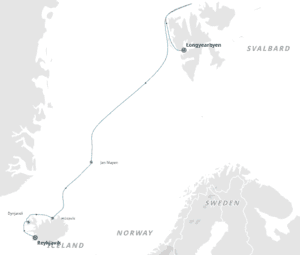
Make sure there is sufficient time to explore this diminutive but dramatic capital city. Despite its small size, you won’t be short of things to see and do. To get your bearings, take the elevator to the top of Hallgrímskirkja. This church, designed by famed Icelandic architect Gudjón Samuelsson is one of the most distinctive buildings in town. When you return to earth, visit the city’s other renowned building Harpa Concert Hall, located at the heart of Reykjavík's regenerated harbour – also the home of the Maritime Museum. Speaking of cultural spaces, tour the National Museum to learn the story of Iceland from past to present. The Reykjavík Art Museum houses an impressive contemporary collection including eye-catching pieces by Erró. And, of course, just 50 kilometres outside the city lies Thingvellir National Park, the site of Iceland’s original Viking parliament
Dia 2: Cachoeira Dynjandi
Considered one of Iceland’s most impressive falls, the thunderous Dynjandi waterfall in the Westfjords region gives the impression of a bridal veil as it spreads down ever-growing cascades
Dia 3 - Ilha Hrísey
Known as the “Pearl of Eyjafjörður,” Hrísey is one of Iceland’s most enchanting islands. Located in the heart of the fjord, this peaceful haven is a true paradise for bird lovers. Home to vast colonies of Arctic terns, puffins, and eider ducks, the island offers an unforgettable close encounter with Iceland’s rich avian life.
Dia 4 - Húsavík
Húsavík, overlooking Skjálfandi Bay, is famed for whale watching, especially the endangered blue whale. The town's Whale and Exploration Museums focusses on Viking history and Apollo astronaut training, taking place nearby. The town also marks Iceland's first house from 860 AD. Húsavík is on the Arctic Coast Way and the start of the Diamond Circle route. Nearby, Kaldbakur pond is a popular geothermal swimming spot oddly populated with goldfish
Dia 5: dia de navegação
Dias de navegação raramente são monótonos. Aproveite para relaxar e ver o mundo passar. Os conveses de observação do navio oferecem vistas incríveis do oceano. Um dia no mar é a oportunidade de conviver com outros passageiros e trocar experiências sobre esta viagem incrível, ou de ir à nossa biblioteca, cheia de livros de referência. Ouça a visão de um especialista em uma das nossas palestras a bordo ou aperfeiçoe suas habilidades de fotografia com dicas valiosas dos nossos fotógrafos profissionais a bordo
Dia 6 - Ilha Jan Mayen
The snow-covered stratovolcano Beerenberg dominates the ice cap and glaciers at the northeast end of Jan Mayen Island. Halfway between Svalbard and Iceland, this Norwegian island's only residents are the Norwegian Armed Forces or meteorological station staff. Purple saxifrage and endemic dandelions grow next to the black sands, while northern fulmars, Brünnich’s and black guillemots and little auks make Jan Mayen an important birding area
Dia 7 - Dia de navegação
Dias de navegação raramente são monótonos. Aproveite para relaxar e ver o mundo passar. Os conveses de observação do navio oferecem vistas incríveis do oceano. Um dia no mar é a oportunidade de conviver com outros passageiros e trocar experiências sobre esta viagem incrível, ou de ir à nossa biblioteca, cheia de livros de referência. Ouça a visão de um especialista em uma das nossas palestras a bordo ou aperfeiçoe suas habilidades de fotografia com dicas valiosas dos nossos fotógrafos profissionais a bordo
Dias 8 a 11: Svalbard
Svalbard is the kingdom of the polar bears, deep in the Arctic Circle, featuring varied polar landscapes and gargantuan glaciers. Beyond magnificent fjords in the north, the remaining sea ice serves as prime hunting grounds for polar bears. Closer to Longyearbyen, tundra and beaches replace snow and ice. Alongside 600 polar bears, this Arctic hotspot is home to walrus, Svalbard reindeer, ringed seals and arctic fox
Dia 12: Longyearbyen
The world's most northerly town, Longyearbyen, on Spitsbergen, Svalbard's largest island, also claims the most northerly high street and pub. It's home to The North Pole Expeditions Museum chronicling early pole-reaching efforts by air. Arctic waters around are populated by whales, including bowheads and narwhals, while walruses are regularly seen hauling out