Dia 1: Reykjavík
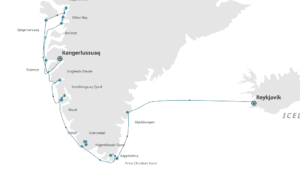
Make sure there is sufficient timeto explore this diminutive but dramatic capital city. Despite its small size, you won’t be short of things to see and do. To get your bearings, take the elevator to the top of Hallgrímskirkja. This church, designed by famed Icelandic architect Gudjón Samuelsson is one of the most distinctive buildings in town. When you return to earth, visit the city’s other renowned building Harpa Concert Hall, located at the heart of Reykjavík's regenerated harbour – also the home of the Maritime Museum. Speaking of cultural spaces, tour the National Museum to learn the story of Iceland from past to present. The Reykjavík Art Museum houses an impressive contemporary collection including eye-catching pieces by Erró. And, of course, just 50 kilometres outside the city lies Thingvellir National Park, the site of Iceland’s original Viking parliament.
Dia 2: dia de navegação
Dias de navegação raramente são monótonos. Aproveite para relaxar e ver o mundo passar. Os conveses de observação do navio oferecem vistas incríveis do oceano. Um dia no mar é a oportunidade de conviver com outros passageiros e trocar experiências sobre esta viagem incrível, ou de ir à nossa biblioteca, cheia de livros de referência. Ouça a visão de um especialista em uma das nossas palestras a bordo ou aperfeiçoe suas habilidades de fotografia com dicas valiosas dos nossos fotógrafos profissionais a bordo
Dia 3: Skjoldungen
On the craggy east coast of Greenland, the stunningly scenic, U-shaped Skjoldungen Fjord is surrounded by lofty snow-capped mountains, dwarf birch, Arctic wildflowers and willow forests ending with the Thrym Glacier. High rock walls, serpentine rivers and large crevasses of ice pillars known as seracs give way to carved icebergs in the fjord that gleam in a white to blue spectrum. You might also have the opportunity to see whales
Dia 4: cruzeiro por Prins Christian Sund
The remote and beautiful Prins Christian Sund fjord carves a dramatic path between magnificent granite cliffs and glaciers, offering a stunning panorama of icebergs, rugged peaks and crystal-clear waters. Stretching 100 km at the southernmost tip of Greenland, this long and winding passage separates the mainland from Sammisoq and the Cape Farewell Archipelago, creating a breathtaking waterway that captivates adventurers and nature lovers alike
Dia 4: Aappilattoq
Colourful Nordic houses stand against dramatic mountain ridges encircling Aappilattoq, a remote Inuit village in Greenland’s Prins Christian Sund. Accessible only by boat or helicopter, Aappilattoq is home to around 100 rugged individuals who make a living through fishing and hunting. Often called the southernmost inhabited area in Greenland, Aappilattoq is in fact at the midpoint of the east and west coasts
Activities:
Aappilattoq Community visit
Hiking to Innap Qaava (Optional)
Dia 5: Grønnedal
Kangilinnguit, formerly Grønnedal, is a historic spot in southwest Greenland and an area of exceptional natural beauty. Once a key U.S. WWII naval base, it lies near Ivigtut and the cryolite mine in scenic Arsuk Fjord. Ships navigate a narrow channel past the Kajartalik lighthouse, Arsuk village and Kungnat Bay, where dramatic landscapes unfold, including the towering 4,600-ft Mt. Kungnait and the breathtaking Arsuk Glacier at the fjord's head
Dia 5: Ivittuut
The deserted mining town of Ivittuut (formerly Ivigtut) was once vital for WWII aircraft production with the world's largest reserve of cryolite, a mineral used in aluminium production. Abandoned houses, the enormous mine pit and above-ground cemetery reveal the history of this settlement. Scattered cryolite chunks on the rocky shore mix with relics like old engines from when Inuit used cryolite for snuff. Now only muskoxen roam this eerie place
Atividades:
Explore Ivittuut, cidade mineira abandonada
Dia 6: Fiorde e Geleira Nigerdlikasik
Nigerdlikasik, at the end of Kvanefjord, is a remote and relatively untouched wilderness offering solitude and stunning views of steep cliffs, mountains and the Nigerdlikasik Brae, a small glacier ice field. The glacial ice creates dramatic scenery with ice formations, meltwater streams, steep cliffs and valleys. Carved by ancient ice, the fjord's volcanic geology and rare-earth mineral deposits make it visually and geologically significant
Dia 7: Nuuk
Home to more than a third of Greenlanders, the capital of Greenland has a thriving cultural scene including the Greenland National Museum, home to the world-renowned Qilakitsoq mummies. Also known by its Danish name of Godthåb (Good Hope), Nuuk's bustling harbour features Nuuk Cathedral and colourful wooden houses, alongside modern architecture. Nuuk also serves as a gateway to Inuit experiences and adventures in the surrounding fjords and mountains
Days 8 - Evigheds Glacier
The Evigheds Glacier, a majestic outflow from the Greenland Ice Sheet, carves through the dramatic Kangerlussuatsiaq Fjord, also known as Eternity Fjord. This 75-km-long waterway is a haven for wildlife, with white-tailed eagles and black-legged kittiwakes soaring above. Calving icebergs showcase Greenland's raw beauty, but sadly like many glaciers, it is slowly retreating due to global warming's impact on this fragile Arctic ecosystem
Days 9 - Qeqertarsuaq
Qeqertarsuaq is the largest town on Disko Island, Greenland’s largest island, where colourful houses pop against dramatic red basalt mountains. Overlooked by striking Lyngemark Glacier, the area is shaped by its volcanic origin, unique terrain featuring dramatic basalt columns, rolling hills black sand beaches. Thanks to its relatively fertile landscape, it supports unique plant species, such as wild angelica, rarely found elsewhere in Greenland
Activities:
Open Town Qeqertarsuaq
Meet the Greenlandic Sledge Dog (Optional)
Kuannit Hike (Optional)
Dia 10: Geleira Eqip Sermia
Eqi Glacier, or Eqip Sermia in Greenlandic, is one of Greenland's largest and most active calving glaciers, spanning nearly 4 km wide and towering over 200 m. Visitors can almost always witness calving, where pieces of ice break off the glacier's face, creating deafening bangs and giant splashes that send waves across the bay. The contrast between thunderous calving and the ensuing silence provides a glimpse of Greenland's dynamic icy landscape
Dia 11: Ilulissat, Baía de Disko
Sailing through the iceberg capital of the world to Disko Bay, the Ilulissat Icefjord is one of the cruise highlights. Given UNESCO World Heritage Site status, the Ilulissat Icefjord is a popular tourist destination, and thanks to the productive Sermeq Kujalleq glacier, thousands of gargantuan icebergs calve from the Greenland ice cap into the sea. The city of Ilulissat is home to many sled-dogs
Activities:
Museums of Ilulissat
Arctic Tundra Hike (Optional)
UNESCO Icefjord Cruise (Optional)
Dia 12: Sisimiut
The second largest town in Greenland, just above the Arctic Circle, Sisimiut remains remarkably ice free in winter and is known as an adventure sports hub all year round. Inhabited for more than 4,500 years by the Dorset, Thule and eventually the Inuit people, dog sledding remains a vital form of transportation. The area is home to humpback whales and Arctic foxes in their summer coat
Activities:
Local cultural event incl. entrance to the Old Museum area
ATV Backcountry Tour (Optional)
Inuit Historical Hike (Optional)
Dia 13: Kangerlussuaq
Once a WWII airbase at the head of Kangerlussuaq Fjord, Kangerlussuaq's history is told at the airport’s museum, showcasing Inuit artefacts. This ice-filled glacial area and tundra is a haven for wildlife, including reindeer, arctic foxes, arctic hare, gyrfalcons and around 10,000 muskoxen