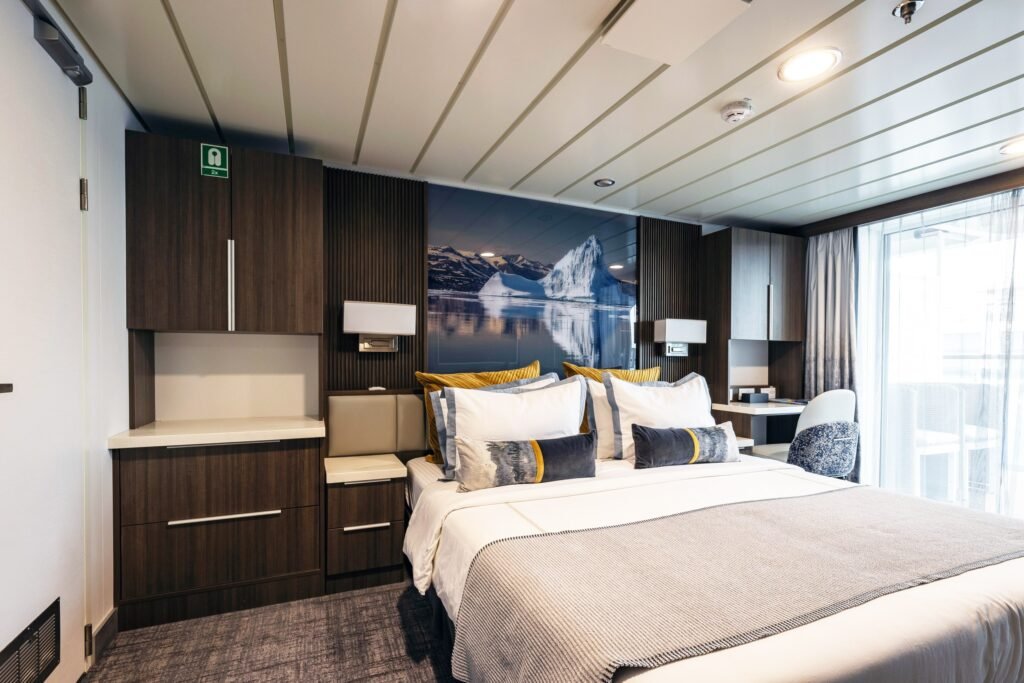
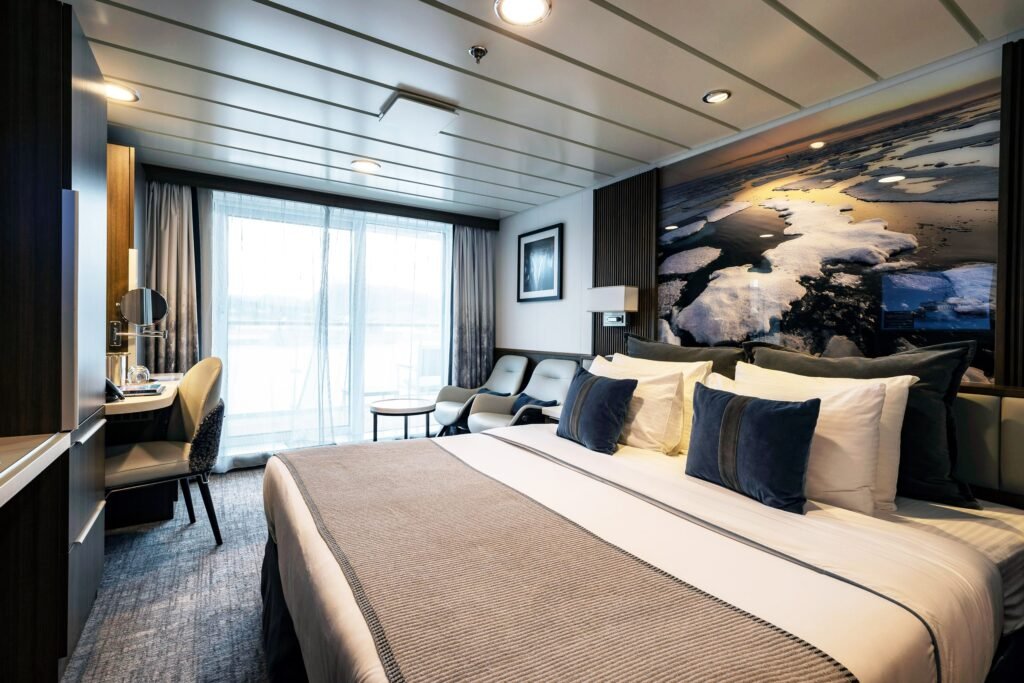
Aurora Stateroom Superior
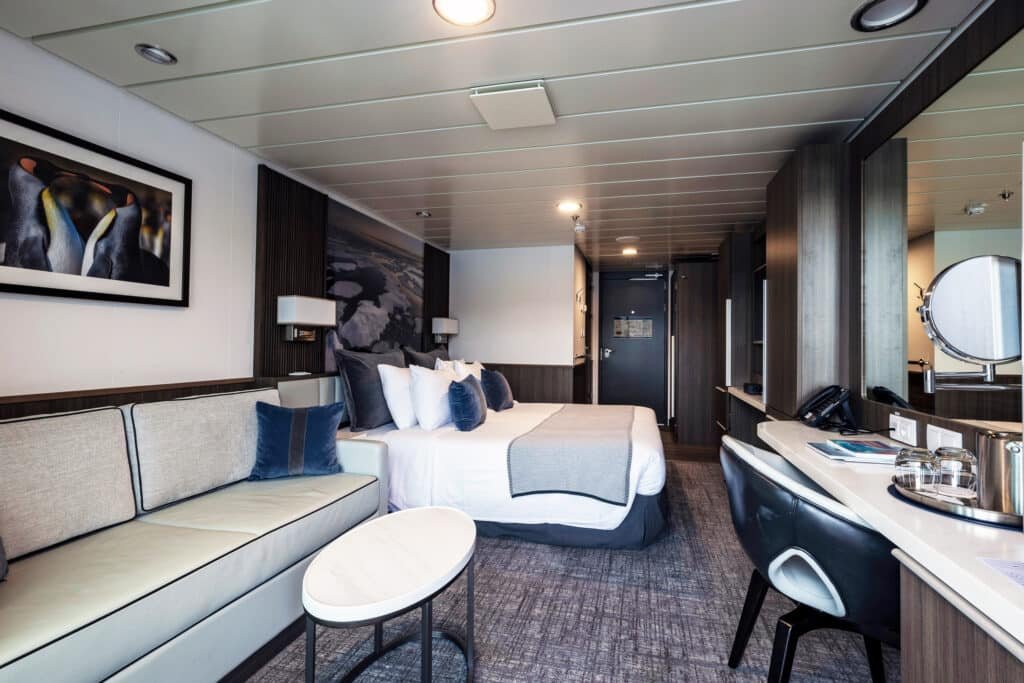
No Deck 7, as cabines têm varandas francesas, janelas do chão ao teto, banheiro privativo e um aconchegante cantinho com escrivaninha.
- Pessoas
- 2
- Tamanho
- 19.9m2 - 20.8m2(214.2ft2 - 223.9ft2)
- Vista
- Varanda francesa
Aurora Expeditions
Atividades oferecidas
A partir de US$ 25.495US$ 20.396 por pessoa
Mais informações
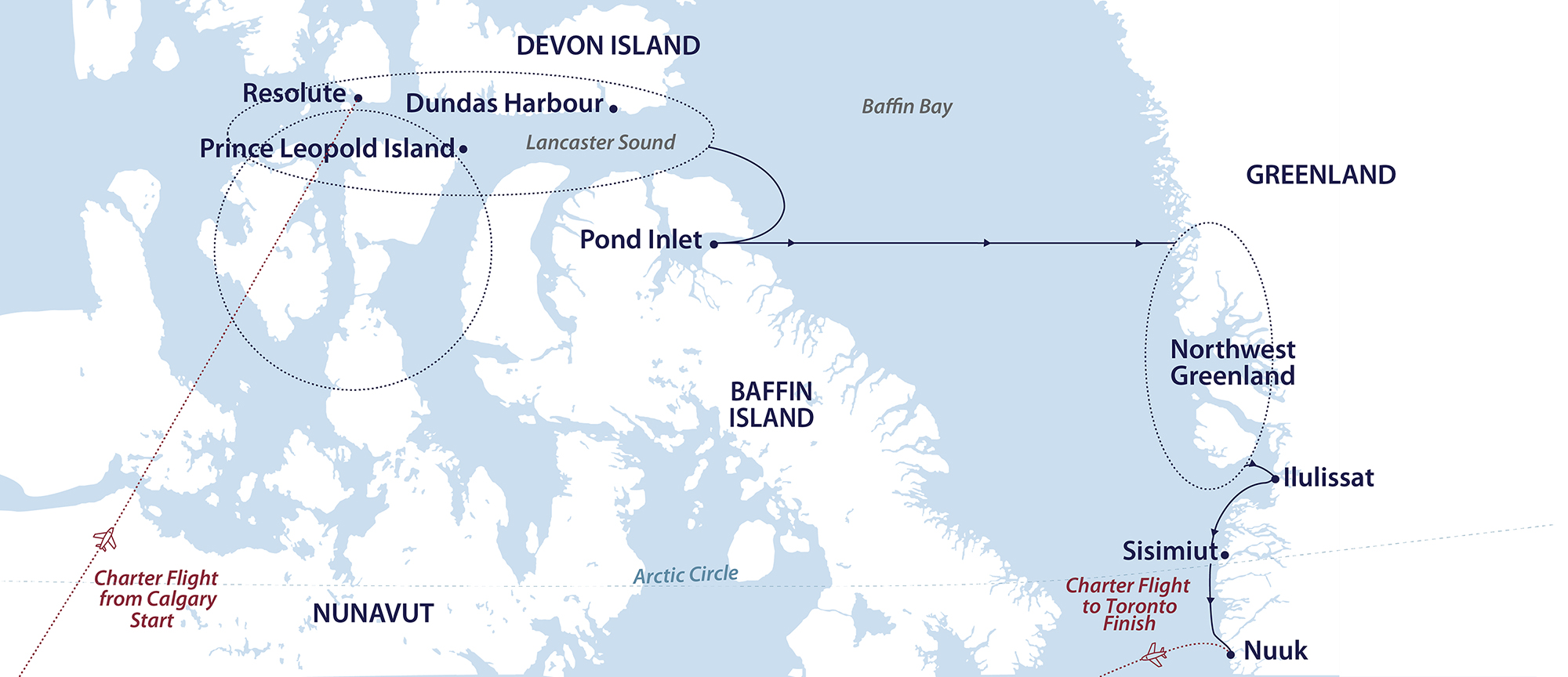
Your journey begins in Calgary before flying north to Resolute, where you embark and sail into the high Arctic waters of Canada, exploring remote regions of the Northwest Passage around Somerset Island and Devon Island, including locations such as Beechey Island and Prince Leopold Island. The voyage continues to Pond Inlet on Baffin Island before crossing Baffin Bay to the western coast of Greenland, where you explore remote fjords such as Uummannaq Fjord and visit iconic Arctic destinations including Ilulissat and Sisimiut. The expedition concludes in Nuuk, followed by a return flight to Toronto, completing a remarkable journey across the Canadian Arctic and Greenland.
Having made your way to Calgary, you will be met by a representative of Aurora Expeditions and transferred to our group hotel located in downtown Calgary. Upon arrival at your included hotel, please visit the Aurora Expeditions hospitality desk to collect your luggage cabin tags and to speak with our ground operations team, who may have information to share with you about pre-embarkation procedures and the charter flight to Resolute tomorrow. You will receive Aurora Expeditions cabin tags for your luggage. Please clearly label the tags with your name and ship cabin number.
O restante do tempo é livre. Todas as refeições de hoje ficam por sua conta.
Hospedagem: Residence Inn by Marriott Calgary Downtown/Beltline District (ou similar)
Please ensure that your luggage is fitted with cabin tags clearly labelled with your name and cabin number. Any valuables or personal items should be kept on you throughout the day. Your luggage will be delivered to your cabin ahead of your arrival on board.
After breakfast at the hotel, board our charter flight to Resolute, where the Sylvia Earle awaits. After boarding, there is time to settle into your cabin before our important safety briefings. This evening, meet your expedition team and crew.
In genuine expeditionary style, our itinerary for the following days is heavily dependent on weather conditions and unpredictable sea ice. The following places are some that we hope to visit.
Baía Elwin (Ikpiarjuk)
Situated on the southeastern coast of Somerset Island, Elwin Bay is a breathtaking, wide inlet famous for its wildlife, particularly polar bears. This area was historically used by hunters and today remains an important habitat for bears who hunt along the ice edge and swim between the scattered ice floes. During summer, beluga whales are sometimes seen offshore, and the rocky beaches may reveal evidence of Arctic foxes and seabird colonies. The surrounding landscapes offer stunning contrasts, from rolling tundra to rugged limestone cliffs. Elwin Bay’s rich natural history and raw beauty make it a highlight for wildlife photography.
Port Leopold
Port Leopold, a barren, windswept bay on the northeastern corner of Somerset Island (Inuktitut Kuuganajuk), is steeped in history. Here, the crews of HMS Enterprise and Investigator were forced to endure a harsh winter while searching for the lost Franklin expedition. Their presence is indelibly marked on a rock engraved with "1849" and the ships' initials. The desolate landscape is punctuated by a lone Hudson Bay Company hut, a failed trading post from the 1920s.
We hope to hike and explore the coastline, discovering the historic Hudson Bay Company house and intriguing Inuit archaeological sites. Be amazed by the otherworldly formations shaped by the region’s freezing and thawing cycles, which our expedition team will detail during recap. Nearby, a cairn marks the spot where Ross's rescue expedition left vital supplies.
Ilha Prince Leopold (Appait)
On the southern side of Lancaster Sound from Beechey Island lie the towering bird cliffs of Prince Leopold Island (Appait), a historic site where in 1848, English explorer James Clark Ross overwintered during the search for the missing Franklin expedition. Prince Leopold Island is the most important bird sanctuary in the Canadian Arctic, with approximately 500,000 birds nesting here in summer. Ringed seals are often spotted on the sea ice around the island and polar bears often lurk nearby.
Baía Radstock
Just a short distance away, Radstock Bay offers a captivating contrast to the open sea. Here, we’ll disembark via Zodiac onto a beach strewn with remnants of the past. Explore the ruins of a Thule village nestled beneath the imposing Caswell Tower, where well preserved stone dwellings coexist with artifacts from later explorers. Witness the stark beauty of this remote bay, characterised by its dramatic cliffs, gravelly beaches, and the scattered remains of whale skeletons that have shaped the landscape and the lives of those who called it home.
Ilha Beechey (Iluvilik)
At the western end of Devon Island lies Beechey Island (Iluvilik), where we plan to land. Named after Frederick William Beechey, the island is a designated Canadian National Historic Site. During the Franklin expedition of 1845–46, Franklin attempted to sail through the Northwest Passage with HMS Erebus and HMS Terror, with perilous results – three of his men are buried here. Roald Amundsen landed at Beechey Island in 1903, during the first successful voyage by ship to fully transit the Northwest Passage from the Atlantic Ocean to the Pacific Ocean.
Baía Maxwell (Tasiujaq)
Maxwell Bay is a broad, sheltered inlet that offers outstanding opportunities for exploration both on land and by sea. The surrounding tundra landscapes provide excellent hiking, with sweeping views of the rugged coastline and inland valleys. Wildlife is abundant in this remote area: muskoxen and caribou roam the open terrain, while polar bears are occasionally seen along the shoreline or on ice floes. The sheltered waters of Maxwell Bay are a haven for marine mammals, including harp seals, ringed seals, and bearded seals. Walruses are sometimes spotted hauled out on the ice or rocky beaches, adding to the rich wildlife experience. Birdlife is also notable, with seabirds such as glaucous gulls and northern fulmars often seen soaring overhead. The bay’s numerous coves and inlets create a sense of discovery at every turn, making it a rewarding destination for Zodiac cruises and shore landings.
Ilha Devon (Tallurutit)
At a latitude of almost 75° degrees north, we are now truly in the High Arctic. Here, nutrient-rich waters support an abundance of wildlife, giving the area the moniker ‘wildlife superhighway’ of the Arctic. Devon Island (Tallurutit) is the largest uninhabited island on Earth and features stunning geology, with flat-topped mountains and glacial valleys giving Devon Island its unique character. We hope to visit Dundas Harbour to enjoy offers walks on undulating tundra, and perhaps some birdwatching. A dilapidated Royal Canadian Mounted Police outpost and remnants of a Hudson’s Bay Company trading post can be found here. In the bay, walruses are often present.
Today we hope to visit Pond Inlet (Mittimatalik), a captivating Inuit community nestled on the northern tip of Baffin Island. Surrounded by towering ice-capped mountains, vast glaciers, and pristine fjords, this remote outpost offers an unparalleled wilderness experience. As you step ashore, you'll be greeted by the warm hospitality of the local Inuit, whose deep connection to the land is evident in their culture and lifestyle. Immerse yourself in their traditions through engaging cultural encounters and gain insights into their unique perspective on life in the Arctic.
Tucked away on the eastern shores of Baffin Island, Feacham Bay is a spectacular, pristine corner of the Canadian Arctic that offers incredible wildlife viewing and unforgettable scenic beauty. Surrounded by towering cliffs and deep fjords, this remote bay is often a haven for wildlife, where muskoxen and Arctic foxes roam the rocky shores, and seals haul out on the ice. The crystal-clear waters of the bay are ideal for Zodiac cruises, where you may spot elusive polar bears hunting along the coast or perhaps witness whales feeding in the nutrient-rich waters.
We exit Canada and cross Baffin Bay to Greenland. Find a spot in one of our many observation lounges and enjoy the spectacular surrounding landscapes. Our talented and knowledgeable expedition members will present informative and entertaining talks about the region that you’re travelling through.
Explore the remote northern reaches of West Greenland, where traditional Inuit settlements cling to the rugged coastline and towering icebergs drift through the deep, clear waters. Every day presents new possibilities, guided by your expedition team, who will hunt for the perfect location to explore the stunning fjord systems by Zodiac. Vast fjord systems such as Uummannaq Fjord, offers endless opportunities for adventure, every corner revealing jaw-dropping views, monumental icebergs, and vibrant rock formations that beg to be explored. Whether you’re cruising silently through the ice-choked waters, hiking across the colourful tundra, or visiting one of the remote communities that dot the coast, the options for discovery are limitless. Kayakers can paddle among the floating icebergs while keeping an eye out for humpback and minke whales. With the spirit of true expedition cruising, this region invites you to immerse yourself in the untamed beauty of Greenland’s northern frontier.
In the afternoon we arrive in Ilulissat. Known as the ‘birthplace of icebergs’, this region produces some of the most dazzling icebergs found anywhere on Earth. Hike to the UNESCO World Heritage-listed Icefjord viewpoint and stand in awe of its immensity. Sermeq Kujalleq, also known as Jakobshavn Glacier, is the most productive glacier – not only in Greenland but the entire Northern Hemisphere. It produces 20 million tonnes of ice each day, all floating into the Ilulissat Icefjord and Disko Bay.
After a morning sailing north towards the Arctic Circle, we arrive in Sisimiut, Greenland’s second largest town. Sisimiut is located approximately 54 kilometres (33.5 miles) north of the Arctic Circle, meaning that during summer, you can experience the midnight sun here. The town is famous for the old blue church with the gate made of whale bone. In the cosy museum next door to the church, you will find an excellent reconstruction of an Inuit turf house as well as exhibits of local history and early life in Greenland.
Approximately 4,500 years ago, the Saqqaq culture arrived from Canada and settled in the area. They lived here for approximately 2,000 years, after which they mysteriously disappeared from the area. The Dorset culture arrived around 500 CE and stayed until the 1200s until they were replaced by the Thule culture, and today, the majority of the population of Sisimiut are descendants of the Thule culture.
Disembark in Nuuk, capital of Greenland, where you say farewell to the crew and expedition team and transfer to the airport for our charter flight to Toronto for an overnight stay.
Hospedagem: Westin Toronto Airport Hotel (ou similar)
After breakfast, check out of your room and continue your journey. Make your own way to Toronto Airport with the hotel complimentary shuttle.
*A $15 USD per person per day gratuity for the crew is automatically added to your onboard account. It is at your discretion if you would like to remove the tip (or adjust the amount) when you settle your bill. It is not necessary to tip the expedition team members. This gratuity amount is included for suites as part of their ‘Suite Benefits’.
É exigido um sinal não reembolsável de US$ 2.500 por pessoa em até 7 dias úteis após a reserva. O pagamento final deve ser feito pelo menos 90 dias antes da data de partida da expedição
Preços por pessoa
Os preços são definidos pelas operadoras e mudam com a procura, às vezes de um dia para o outro. Valores em dólar, por pessoa.
No Deck 7, as cabines têm varandas francesas, janelas do chão ao teto, banheiro privativo e um aconchegante cantinho com escrivaninha.
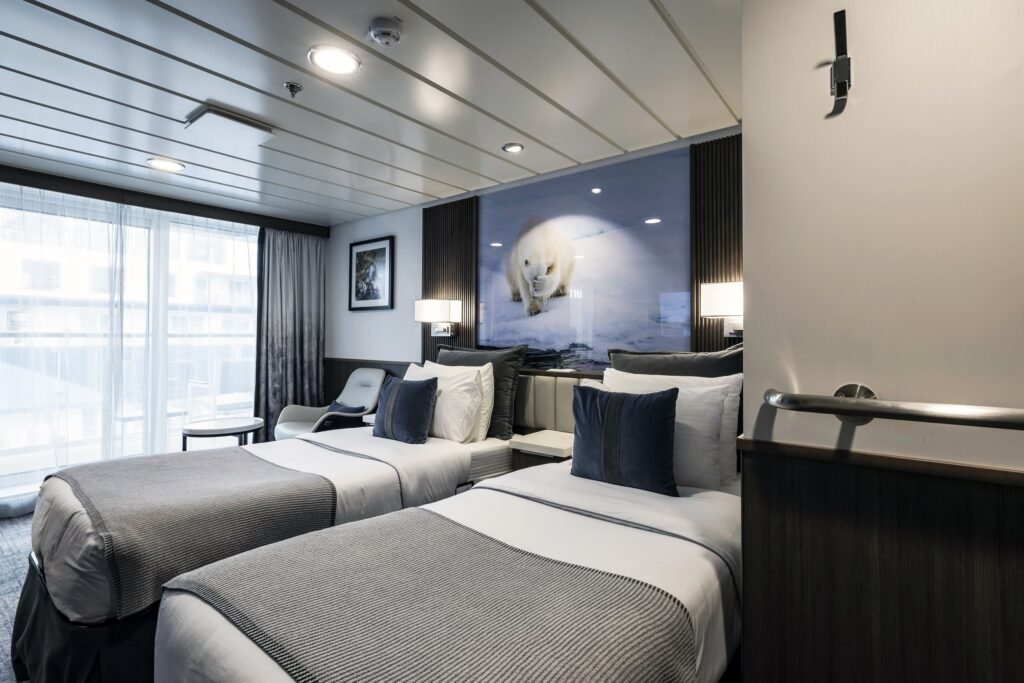
As nossas 11 Cabines com varanda C são a opção mais econômica, com as comodidades essenciais e espaço confortável para até dois hóspedes. Essas cabines ficam nos Decks 4 e 6, em locais práticos.
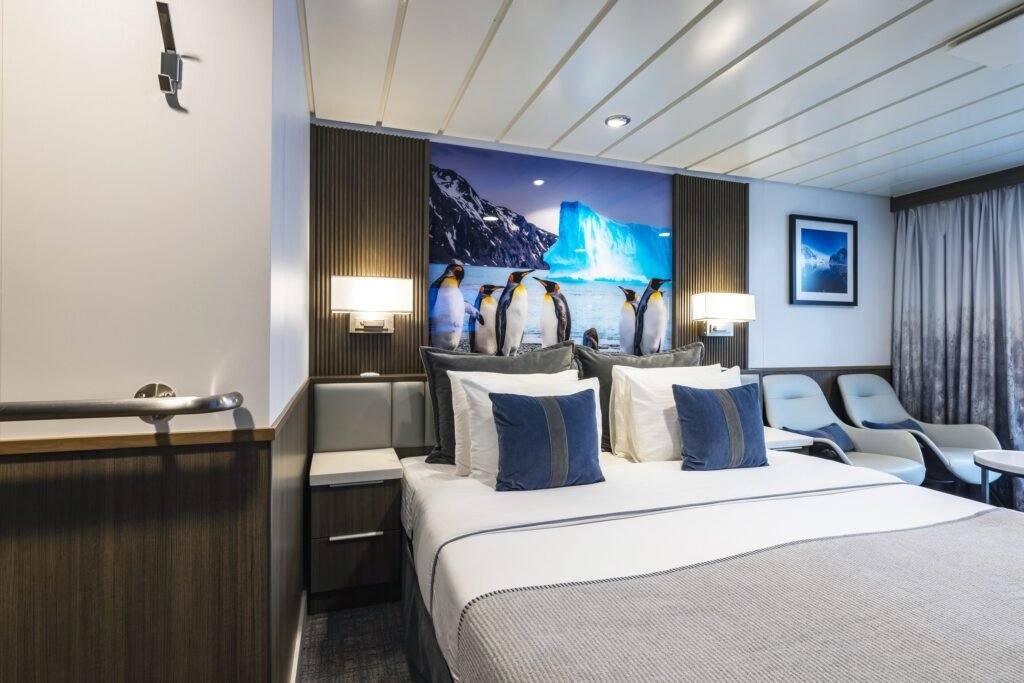
As nossas 17 Cabines com varanda B são a opção padrão, e muitas têm portas de comunicação entre si, perfeitas para famílias ou grupos. Essas cabines ficam na proa e na popa dos Decks 4 e 6.
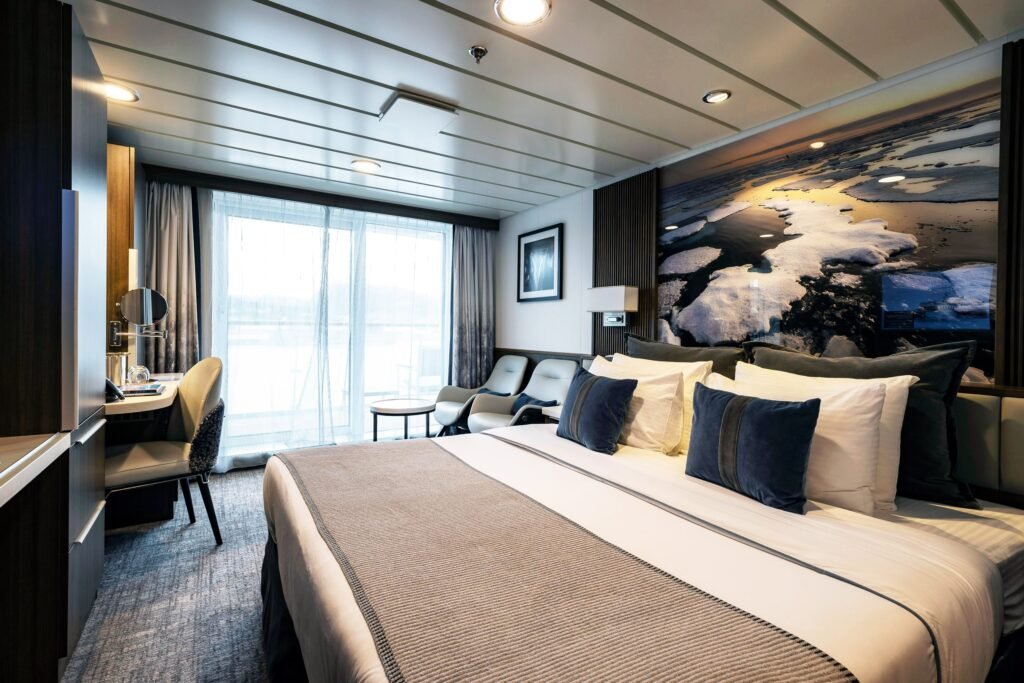
As nossas 23 Cabines com varanda A são a opção premium e a mais numerosa a bordo. Bem localizadas em áreas nobres dos Decks 4 e 6, dão acesso fácil aos outros níveis pelas escadas internas ou pelo elevador.
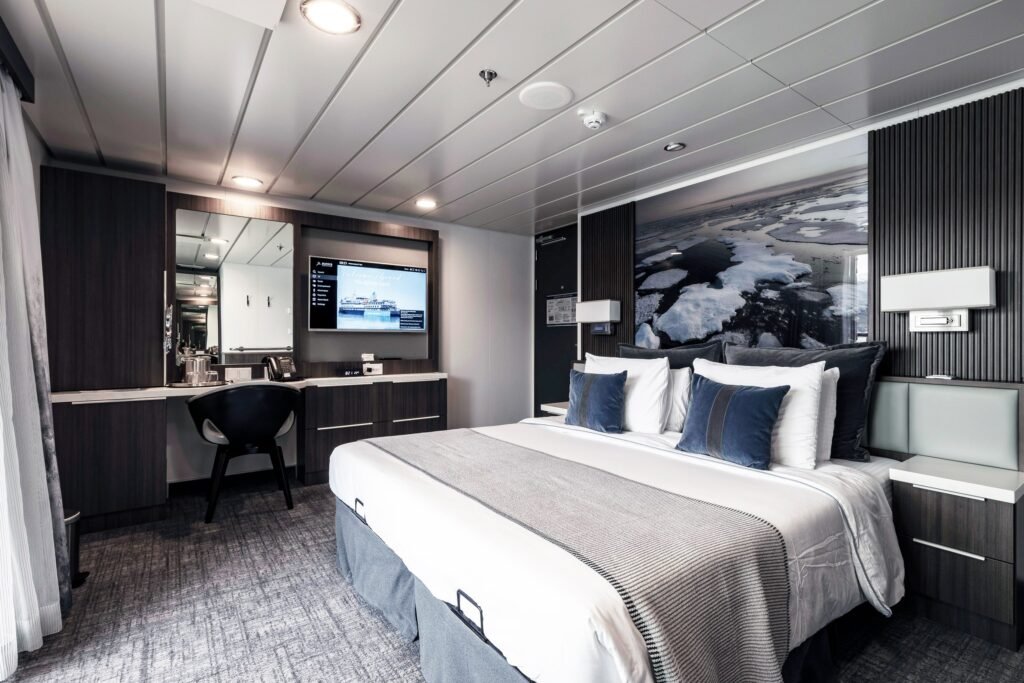
Com espaço extra para relaxar, as Cabines Superiores com varanda são ideais para aventureiros polares que viajam com bastante equipamento.
Localizadas nos decks 4 e 6, estas cabines têm janelas do chão ao teto, banheiro privativo e uma área de trabalho confortável. Algumas cabines também têm banheiro acessível para cadeira de rodas.
No Deck 7, as quatro Suítes Júnior têm vistas deslumbrantes. Quando não estiver explorando, relaxe na sala de estar privativa ou aprecie a paisagem da sua própria varanda.
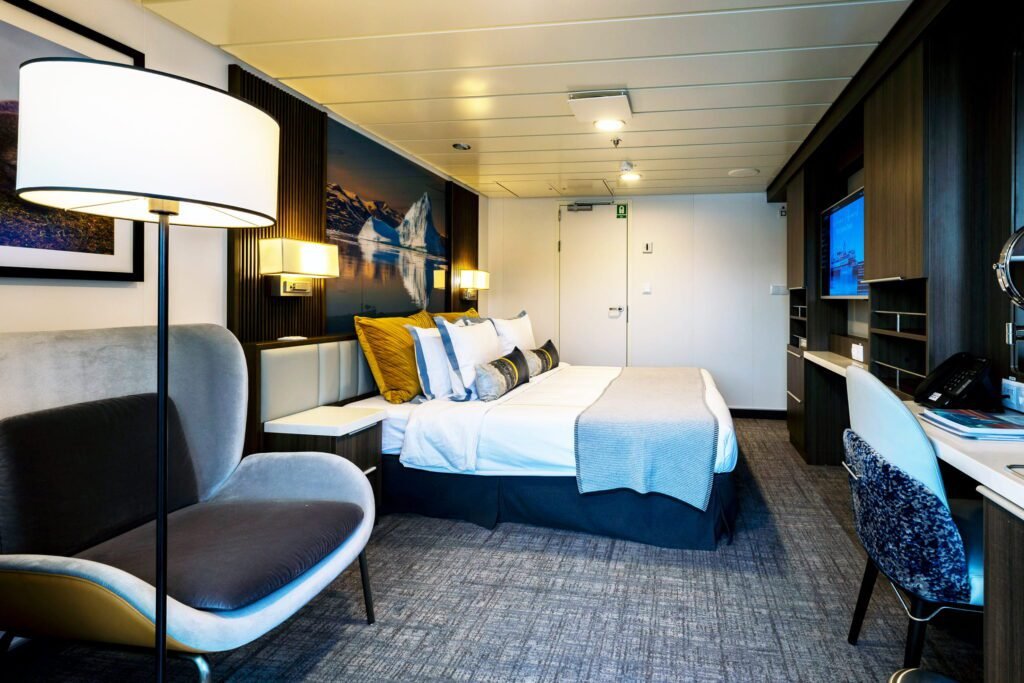
A maior e mais luxuosa acomodação a bordo, a Suíte do Capitão combina elegância e conforto na medida para a sua aventura polar. Com uma sala de estar espaçosa, varanda privativa, closet e banheiro privativo, essa suíte exclusiva é o refúgio ideal. Como só existe uma, é essencial reservar com antecedência.
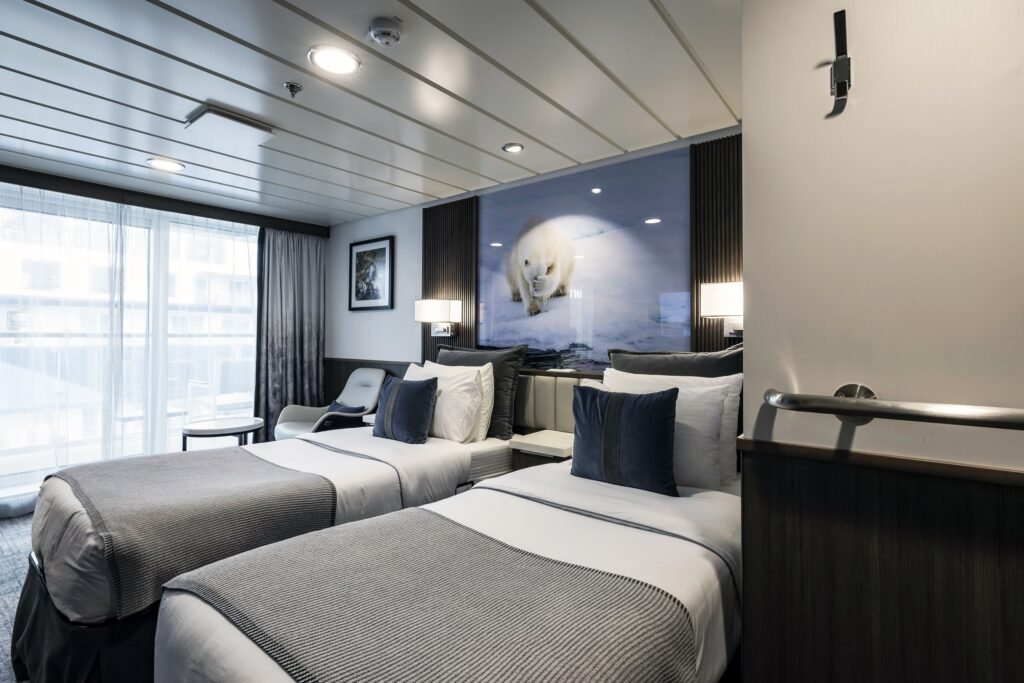
Our two Balcony Stateroom C - Solo rooms offer the most budget-friendly option, complete with essential amenities and strategically located across Deck 6.
Esgotada
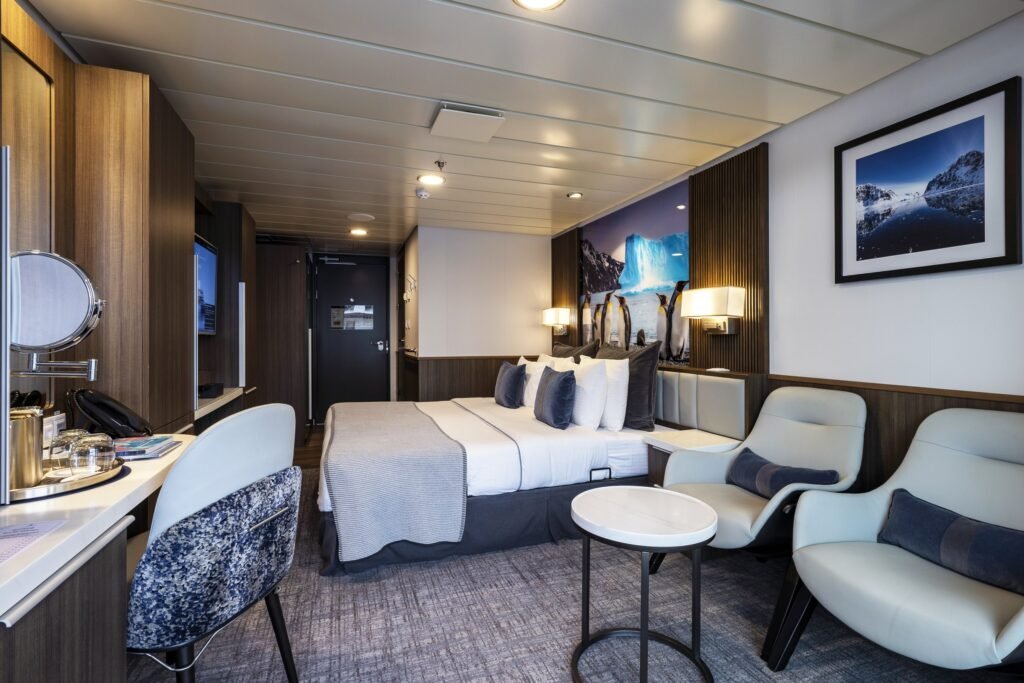
Nossas duas Cabines com varanda B - Individual são a opção padrão, localizadas na parte da frente do Deck 6.
Esgotada
Our six Balcony Stateroom A - Solo rooms are our premium option, strategically located on Decks 4 and 6 for convenient access to other levels via internal stairs or the elevator.
Esgotada
Opcionais
US$ 890 por pessoa
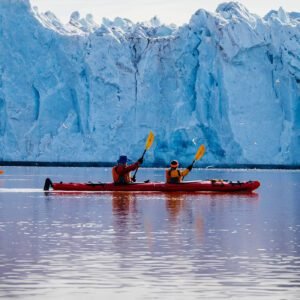
Designed by kayakers for kayakers, this small-group program maximizes time on the water while exploring remote coastlines. Led by expert polar guides, you’ll paddle 5–15 km per outing (2–4 hours), often combining kayaking with shore landings for the ultimate expedition experience. All gear, including dry suits and booties, is provided. Weather permitting, this unforgettable adventure runs alongside standard land excursions—giving you a truly immersive journey.
O navio
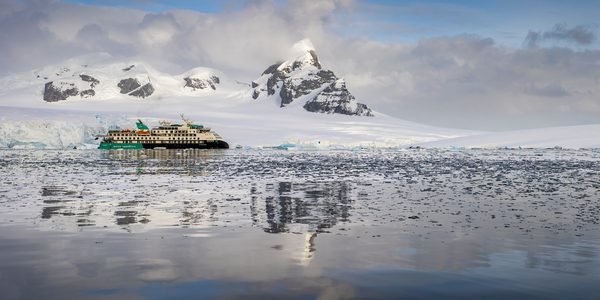
O Sylvia Earle, um navio de expedição construído para esse fim, leva viajantes em jornadas transformadoras aos lugares mais remotos e espetaculares do mundo. O design Ulstein X-BOW® garante uma navegação mais suave e reduz o impacto ambiental.
Em homenagem à Dra. Sylvia Earle e a seis mulheres pioneiras na conservação, os decks públicos do navio celebram as contribuições delas e chamam atenção para o seu trabalho essencial.
Com um Centro de Ciência Cidadã, palestrantes especializados e um programa científico interativo, o Sylvia Earle enriquece cada viagem com conhecimento e conexões mais profundas com a natureza.
O Sylvia Earle foi projetado para uma exploração imersiva e leva no máximo 130 expedicionários, garantindo experiências em grupos pequenos e intimistas. Cada detalhe do navio foi pensado para favorecer a descoberta, o conforto e a sustentabilidade.
Cada detalhe do Sylvia Earle foi feito para a exploração, para que você conheça a natureza de perto viajando com conforto e sustentabilidade.
Perguntas frequentes
Yes!!! After leaving Resolute, it will be the ultimate goal of the Captain, Expedition Leader, and the Expedition Team to make sure we get off the ship as much as possible. You’ll participate in landings, zodiac cruises, and any additional activities you’ve signed up for. Check the “Detailed trip itinerary” below for more details on each outing.
O preço mostrado é o preço ""tudo incluído”, com todos os impostos, taxas, taxas portuárias e licenças exigidas, que são administrados pela operadora. Os únicos custos adicionais importantes serão o seguro viagem obrigatório, a gorjeta opcional e as atividades adicionais.
Não necessariamente! Nossas viagens em grupo costumam ter cerca de 50% de viajantes sozinhos! Os preços são sempre por pessoa, por cama. Se você viaja sozinho, vamos combinar você com alguém do mesmo gênero do nosso grupo para dividir a cabine. Também existe a opção de cabine individual em algumas viagens. Mande uma mensagem para a gente sobre cabines individuais se essa for sua preferência.
Fale com a nossa equipe. A gente confirma a disponibilidade com a operadora e responde por email.
Pedir informações desta viagemPassagem do Noroeste · 12 set 2027